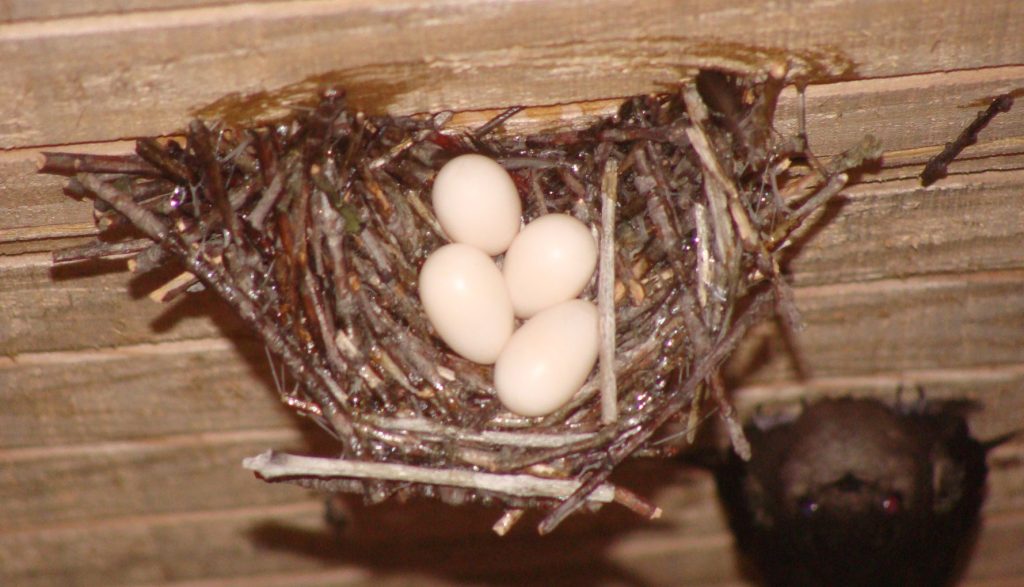
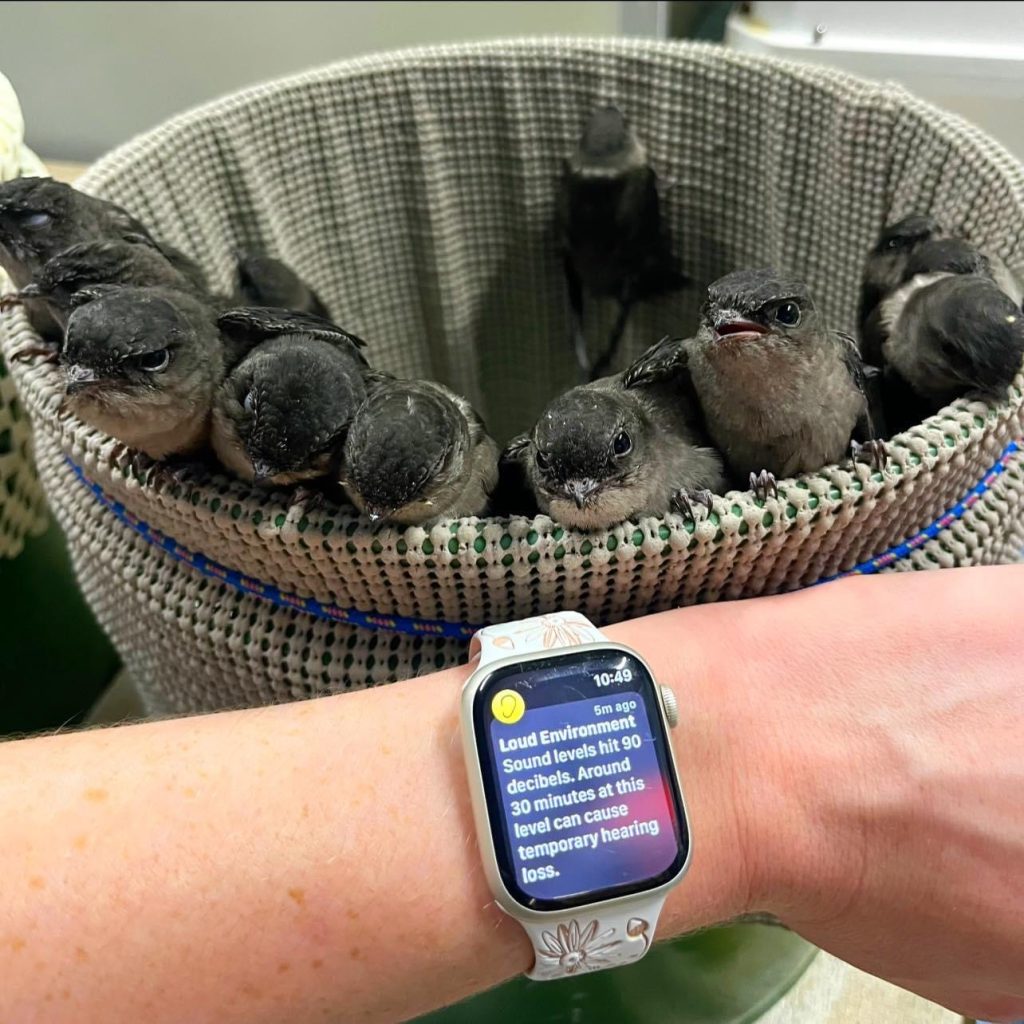
Wildbird Recovery’s founder and licensed wildlife rehabber, Beth, has a wealth of knowledge when it comes to Chimney Swifts. She has been so patient and committed to helping Chimney Swifts. In 2023, care was provided to 62 Chimney Swifts with the majority being successfully released back to the wild. The view of watching Chimney Swifts fly into our own artificial Chimney Swift Towers (many are probably past and present patients of ours) has all the feels.
Stormy Oaks Chimney Swift Cameras
The Stormy Oaks Chimney Swift Cameras in our artificial Chimney Swift Towers (T1, T2, T3, and T4) came about because when Dr. Jim Kellam, a professor at Saint Vincent College, began volunteering with us, he learned of our great fondness and expertise in rehabilitating injured Swifts. In an effort to expand Saint Vincent College’s reach in promoting ornithology, he brought together Stormy Oaks Nature Conservancy and PixCams in this joint effort. Having live cameras on our towers has been a dream come true for all of us. We get a rare opportunity to observe and learn as much as we can about these incredible birds. Please do not use photos or video from the cameras without permission from Wildbird Recovery and PixCams.
In 2023, Stormy Oaks Chimney Swift T1 camera went live – one of the nation’s only wildlife cameras monitoring Chimney Swifts! It is also noted that Stormy Oaks Chimney Swift T1 had its first nesting pair in 2011; a nesting pair in 2026 means 16 summers that T1 has had a nesting pair! We were so fortunate to have a scout do his Eagle Scout project at our facility. He built us the artificial tower for the swifts to use for nesting. It has been a magical experience since!
In 2024, Stormy Oaks Chimney Swift T2 camera went live. It is noted that Stormy Oaks Chimney Swift T2 (built in 2016) has had a nesting pair for eight (8) summers. A nesting pair in 2026 means nine (9) summers that T2 has had a nesting pair. In 2025, Stormy Oaks Chimney Swift T3 (built in 2024) and Stormy Oaks Chimney Swift T4 (built in 2024) cameras went live. It is noted that Stormy Oaks Chimney Swift T3 has had a nesting pair for one (1) summer in 2024. Stormy Oaks Chimney Swift T4 was finished after the Chimney Swifts returned in April 2024 and has had a nesting pair for one (1) summer in 2025.
There are now a total of four (4) cameras monitoring Chimney Swift activity at Stormy Oaks Nature Conservancy in Valencia, Pennsylvania. These cameras can be viewed by the public via PixCams – Chimney Swift Tower Cams. You can check out the live feed of our Stormy Oaks Chimney Swift Cams any time of the day or night. Kindly know that Chimney Swifts migrate; the best time to view activity in the Towers is May through September.
Chimney Swift Data Collection (2024 – 2026)
Wildbird Recovery is collecting valuable data of the nesting cycle of Chimney Swifts. Chimney Swift data collection at Stormy Oaks Nature Conservancy started in 2024 monitoring Stormy Oaks T1 and T2. The data collection expanded in 2025 to monitoring Stormy Oaks T1, T2, and T4. We are anxiously awaiting to see what 2026 brings!
Chimney Swift Education and Rehabilitation
The number of towers at Stormy Oaks Nature Conservancy might be small, but we are committed to our conservation efforts and raising awareness for ways the community can help Chimney Swifts. We welcome the opportunity to educate the public about this species. Wildbird Recovery is the primary licensed wildlife rehabilitation center in Western Pennsylvania for Chimney Swifts.
If you believe the noise in your chimney might be Swifts or you find an adult Swift in your house or babies in your fireplace, please contact Wildbird Recovery for help (724-898-1788; leave a voice message and we will return your call between caring for our wild bird patients). We are the primary licensed wildlife rehabilitation center in Western Pennsylvania for Chimney Swifts.
If you have a masonry chimney and would like to provide nesting habitat for Swifts, if you believe the noise in your chimney might be Swifts or you find an adult Swift in your house or babies in your fireplace, please contact Wildbird Recovery 724.898.1788 for help. (IMPORTANT: Leave a voice message and we will return your call between caring for our wild bird patients. There is NO front desk at Wildbird Recovery). For more information about the importance of Chimney Swifts and building your own artificial nesting site, please visit the wonderful website and advocates of the Chimney Swift at www.chimneyswifts.org.
IMPORTANT: Artificial Chimney Swift Towers do require maintenance and on an annual basis, the tower should be cleaned of leaves/debris that fall to the bottom of the tower and remove the nest build in the prior nesting season by April 15 (for those in Pennsylvania) or before the return of Chimney Swifts in your area. The bottom of the artificial Chimney Swift tower should have a clean-out that is easily accessed!
Support Our Efforts:
Our goal is to continue to increase the number of Chimney Swift Tower at Stormy Oaks Nature Conservancy. If you are interested in supporting our conservation efforts and/or the care of patients, please see our Ways to Donate page of our website and mark any gifts given as “WBR Chimney Swifts”: https://www.wildbirdrecovery.org/donate/
Our Fall Migration Festival has an annual sponsorship opportunity too! Email hello@wildbirdrecovery.org to learn more!
Chimney Swift Facts:
Many people, upon seeing a quick, small blackish bird flying out of the fireplace and into the living room, think they are seeing a bat. Here are some facts about Chimney Swifts:
- Spend almost entire day flying
- Closely related to the Hummingbird
- Cannot perch on branches, only on vertical surfaces like the inside of a chimney
- Catch insects only while flying, their beaks don’t allow them to pick up the insects
- Swifts usually return to the same nesting site and reunite with the same mate from the previous year
- Use their sticky saliva to “glue” twigs together for the nest
- One to two additional Swifts (usually relatives) help the parents to care for young
Source:
- Dexter, R. W. “Sociality of Chimney Swifts (Chaetura pelagica) Nesting in a Colony, “North American Bird Bander. 17-2 (1992): 61-64
Please do not use photos or video without permission from Wildbird Recovery.